
Francis Picabia
(1879 - 1953)
biography
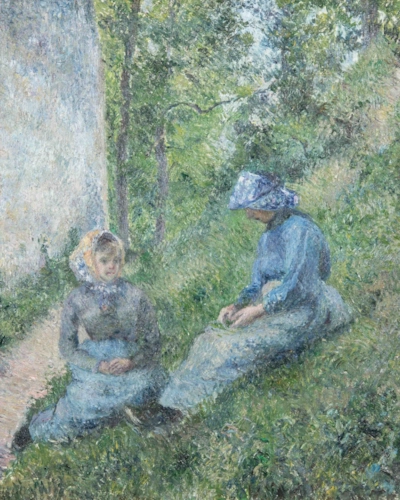
Francis Picabia was born in Paris in 1879 to a French mother and Cuban-Spanish father employed at the Ministry of Finance. He studied at the École des Arts Décoratifs and briefly at the École des Beaux-Arts, initially absorbing the influence of Impressionism and the Post-Impressionists. His early landscapes and marine views, exhibited at the Salon d’Automne and the Galerie Haussmann, reveal a refined handling of light and colour indebted to Alfred Sisley and Camille Pissarro. By 1910, however, Picabia had begun to shift towards a more abstract and Cubist idiom.
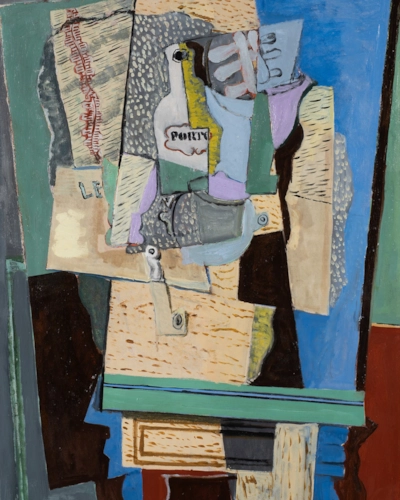
A founding figure within the Parisian avant-garde, Picabia aligned himself with Cubism before becoming one of the most significant voices of Dada. Frequent travel to New York in 1913 brought him into contact with Man Ray and Marcel Duchamp, and he began to embrace mechanical imagery. His editorship of the Dada magazine 391 and participation in Zürich and Paris Dada positioned him at the centre of anti-aesthetic provocation, engaging in performance, typography, collage and polemical text as much as painting.
From the 1920s Picabia pursued a variety of styles, moving between figuration, pseudo-classical nudes, and the controversial “transparencies”, which layered compositions of superimposed imagery. Later work shifted again towards abstraction, then to kitsch-inflected realism, reflecting his conviction that no single style should determine artistic identity. His exhibitions across Europe and the United States, including major presentations in Paris, Barcelona and New York, consolidated his reputation as one of modernism’s most iconoclastic innovators.
Picabia died in Paris in 1953. His work is represented in major collections worldwide, including the Centre Pompidou, Paris; The Museum of Modern Art, New York; Tate, London; and the Art Institute of Chicago, affirming his legacy as a pivotal, unruly force within twentieth-century art.
A founding figure within the Parisian avant-garde, Picabia aligned himself with Cubism before becoming one of the most significant voices of Dada. Frequent travel to New York in 1913 brought him into contact with Man Ray and Marcel Duchamp, and he began to embrace mechanical imagery. His editorship of the Dada magazine 391 and participation in Zürich and Paris Dada positioned him at the centre of anti-aesthetic provocation, engaging in performance, typography, collage and polemical text as much as painting.
From the 1920s Picabia pursued a variety of styles, moving between figuration, pseudo-classical nudes, and the controversial “transparencies”, which layered compositions of superimposed imagery. Later work shifted again towards abstraction, then to kitsch-inflected realism, reflecting his conviction that no single style should determine artistic identity. His exhibitions across Europe and the United States, including major presentations in Paris, Barcelona and New York, consolidated his reputation as one of modernism’s most iconoclastic innovators.
Picabia died in Paris in 1953. His work is represented in major collections worldwide, including the Centre Pompidou, Paris; The Museum of Modern Art, New York; Tate, London; and the Art Institute of Chicago, affirming his legacy as a pivotal, unruly force within twentieth-century art.
biography