
Orovida Pissarro
1893 - 1968
Dinka with a Bongo
Egg tempera on linen, laid on board
85 x 62.3 cm (33 ½ x 24 ½ inches)
Signed and dated lower right Orovida 1937
85 x 62.3 cm (33 ½ x 24 ½ inches)
Signed and dated lower right Orovida 1937


Redfern Gallery, London, August 1937
Collection of Mrs Tongo, from whence to:
Sotheby's, London,15th December 1965
Royal Academy, London 11th May 1966, no. 728
Reverend Canon Ernest A Bawtree, Cambridgeshire, England
Gillian Jason Gallery, London, acquired from the above, 8th November 1984
Christie's, London, 7th June 1985
Collection of Mrs Tongo, from whence to:
Sotheby's, London,15th December 1965
Royal Academy, London 11th May 1966, no. 728
Reverend Canon Ernest A Bawtree, Cambridgeshire, England
Gillian Jason Gallery, London, acquired from the above, 8th November 1984
Christie's, London, 7th June 1985
London, Redfern Gallery, Summer Salon, 5th August - 25th September 1937, no. 12
London, Royal Academy, 1966, no. 728
London, Royal Academy, 1966, no. 728
K L Erickson, Orovida Pissarro: Painter and Print-Maker with A Catalogue Raisonné of Paintings, (doctoral thesis), Oxford, 1992, Appendices, no. 69, p. 73-74 (illustrated)
Orovida’s first series of imaginative works, executed in the 1920s and 30s, reflect her interest in non-Western art. This was largely fuelled by the fashion for Orientalism in fin-de-siècle France, but also by the works of Paul Gauguin and those of her uncle Georges Manzana Pissarro, particularly his solo show at the Musée des Arts Décoratifs in Paris in 1914. Orovida was struck by her uncle’s Orientalist and Decorative portraits and his use of gold and silver. The flattening of the picture plane and the increasingly stylised treatment of her subjects would also have been influenced by exhibitions which she frequented in London, including a presentation on Persian art at Burlington house in 1930-31 as well as her numerous trips to the British Museum. To Orovida, non-Western art offered greater creative freedom, as she later wrote: ‘Western art has led straight to the photo and eastern art is still free.’ As a result, her early works often show subjects such as Mongolian horse-riders, African dancers, Persian princes and exotic animals executed in egg tempera and bodycolour which she made herself and applied in thin, delicate washes to silk, linen and paper sometimes embellished with brocade borders. Ironically, Orovida once famously stated in a newspaper interview that the furthest east she had ever travelled was the British Museum.
This original painting by Orovida Pissarro is available for immediate purchase.
This original painting by Orovida Pissarro is available for immediate purchase.
Orovida Pissarro
biography
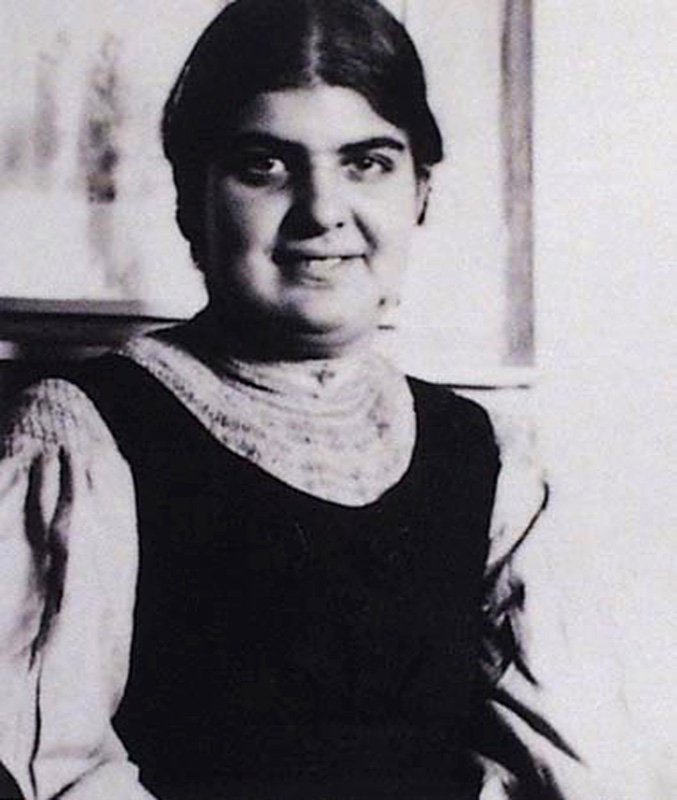
Orovida Camille Pissarro, granddaughter of Camille Pissarro, was the only child of Lucien and Esther Pissarro. Born in Epping in 1893, she was the first woman of the family to become an artist and the first of her generation to do so. She lived and worked predominantly in London, where she became a member of several British arts clubs and societies.
Orovida first learned to paint in the Impressionist manner of her father. After a brief period of formal study with Walter Sickert in 1913, she turned away from formal art schooling and remained outside any mainstream British movement throughout her career. To Lucien's disappointment, she soon moved away from naturalistic painting and developed a distinctive style drawing on Japanese, Chinese, Persian and Indian art.
Her departure from Impressionism, which had become a way of life for the Pissarro family, and her decision to drop the family name and use Orovida alone as a nom de peintre, suggest a desire for independence and distance from the weight of the family legacy.
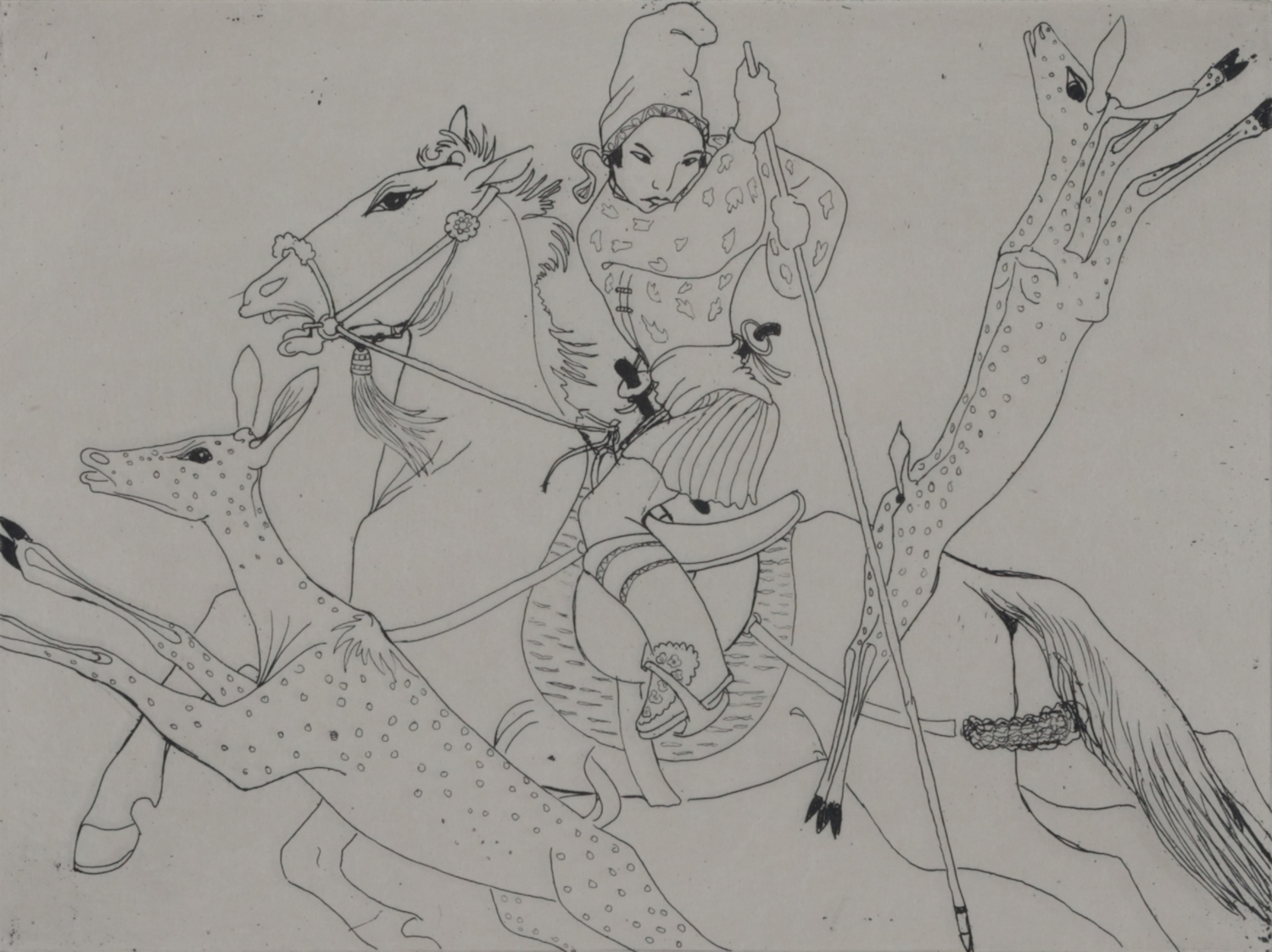
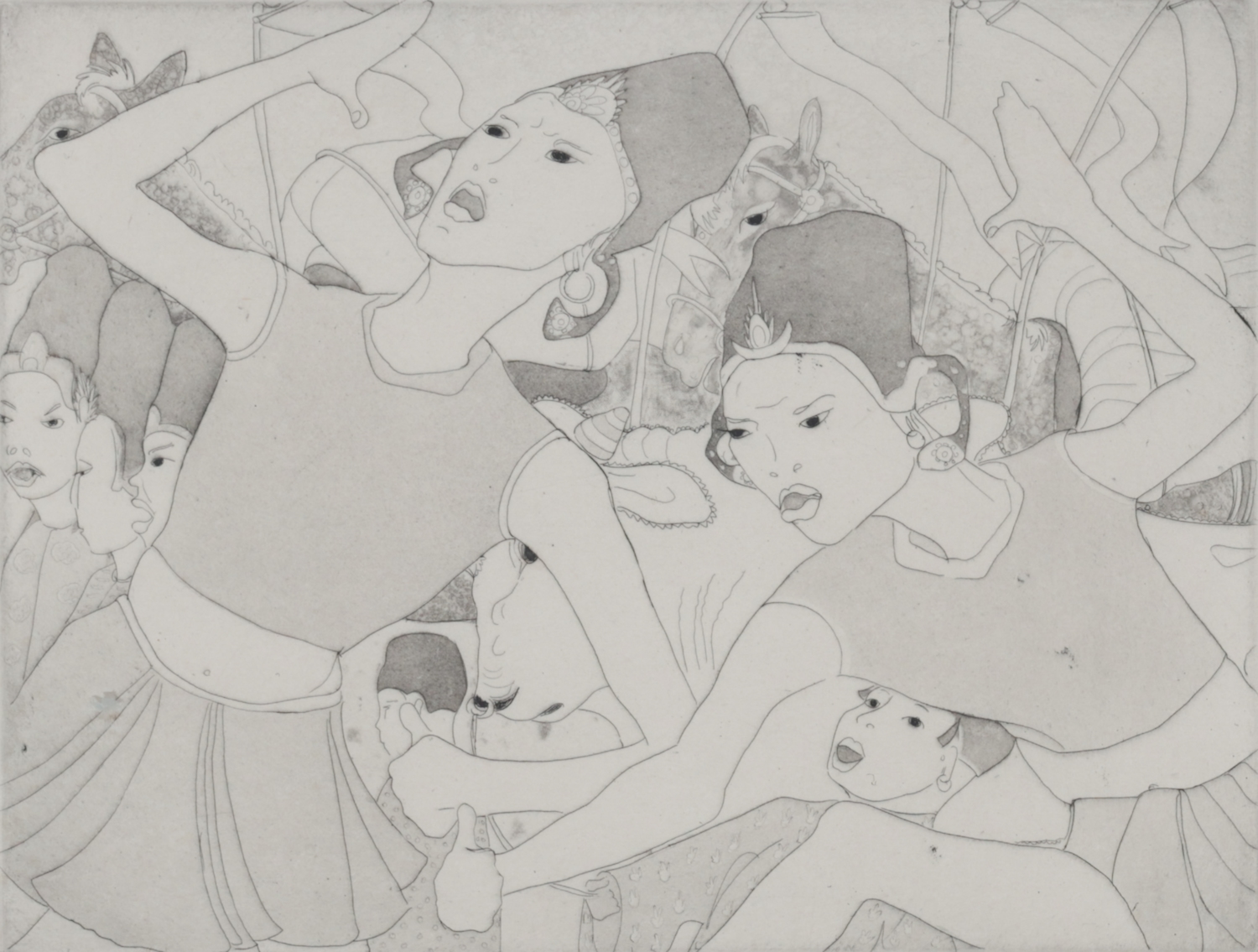
Her most distinctive works were produced between 1919 and 1939, using homemade egg tempera applied in thin, delicate washes to silk, linen or paper and sometimes finished with brocade borders. These decorative works generally depict Eastern, Asian and African subjects, such as Mongolian horse-riders, tribal dancers and Persian princes, often engaged in dancing or hunting rituals.
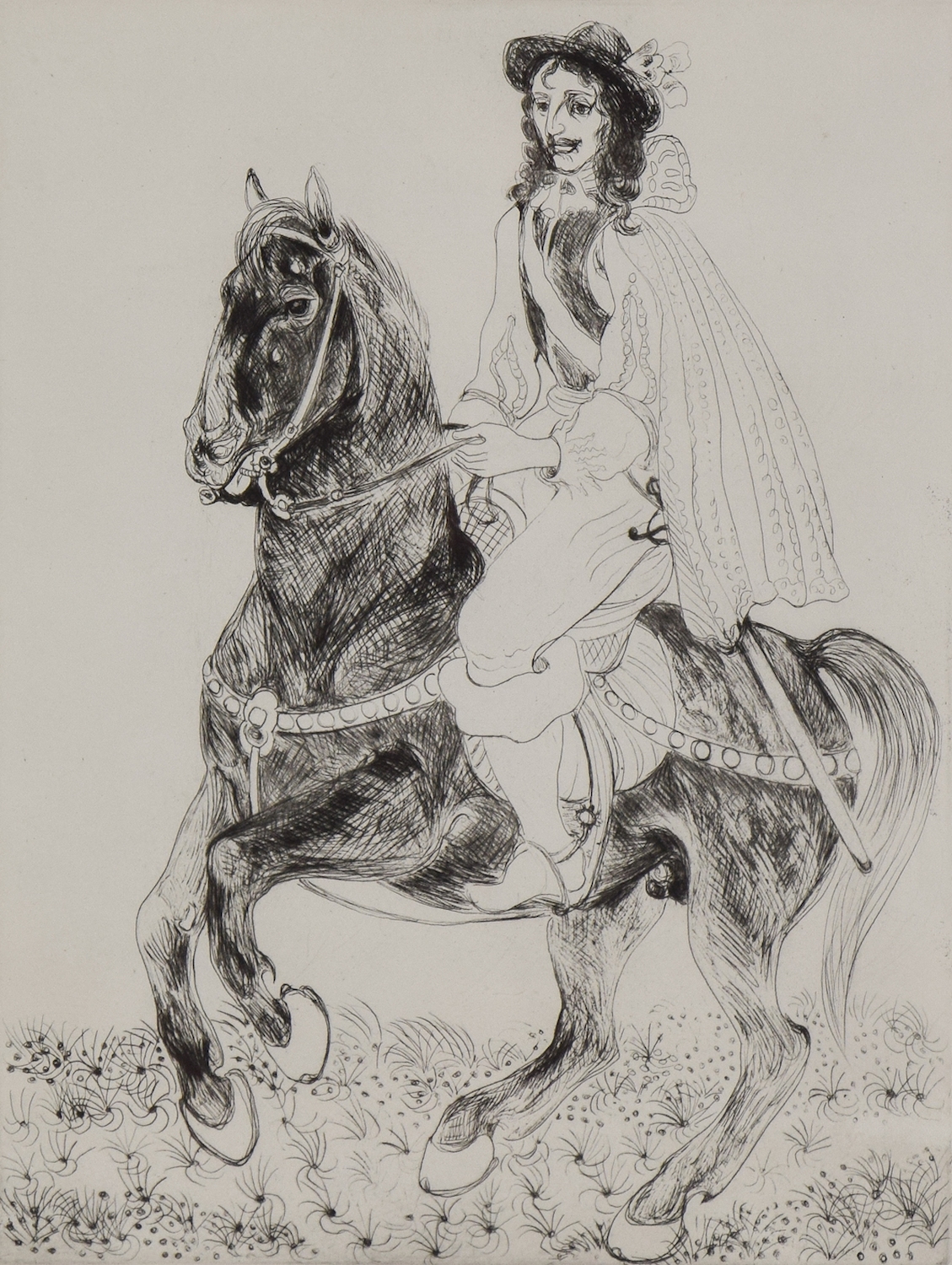
The second half of her career was marked by a change in style and subject. The outbreak of the Second World War brought a shortage of eggs, which led Orovida to take up oil painting. The new medium accompanied a turn to contemporary subjects from everyday life and a return to a more naturalistic manner. She was also a printmaker, working in etching, engraving and lithography, and a skilled draughtsman. She observed animals at London Zoo, which she juxtaposed with images of the peoples of the countries they originally inhabited. The British Museum and the Ashmolean Museum in Oxford both hold substantial collections of her etchings.
Towards the end of her life, she played an important part in developing the Pissarro family archive, established by her parents at the Ashmolean Museum. Her work is also held in a number of public collections across the United Kingdom. She never married and had no children.
Orovida Pissarro
biography
you may also like

Orovida Pissarro
1893 - 1968
Winter (The Skaters)
Egg tempera on linen
91.5 x 114.3 cm (36.02 x 45.00 inches)
91.5 x 114.3 cm (36.02 x 45.00 inches)
Orovida Pissarro
1893 - 1968
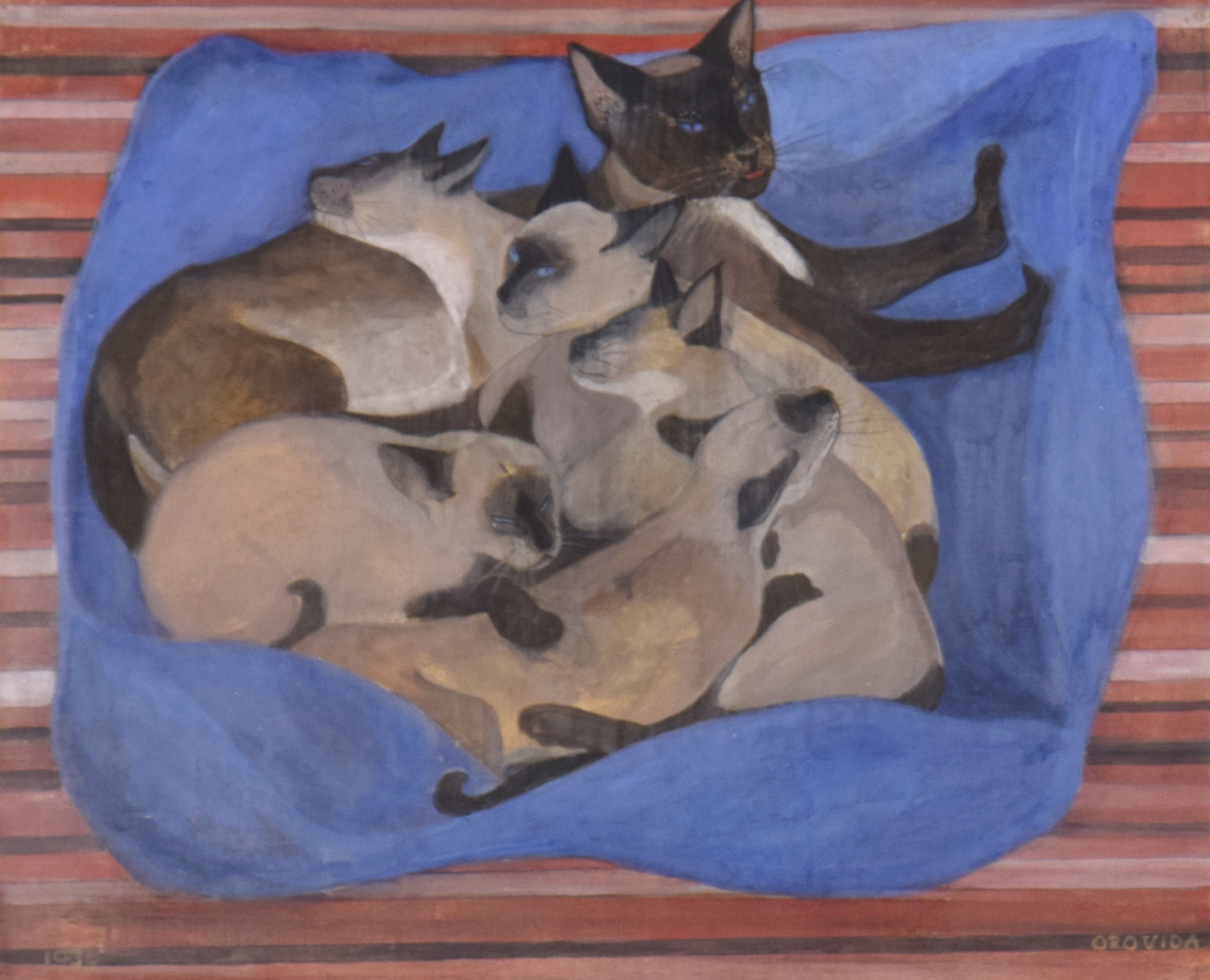
Siamese Cat with Kittens
Egg tempera on linen
39 x 48 cm (15.35 x 18.90 inches)
39 x 48 cm (15.35 x 18.90 inches)
Orovida Pissarro
1893 - 1968
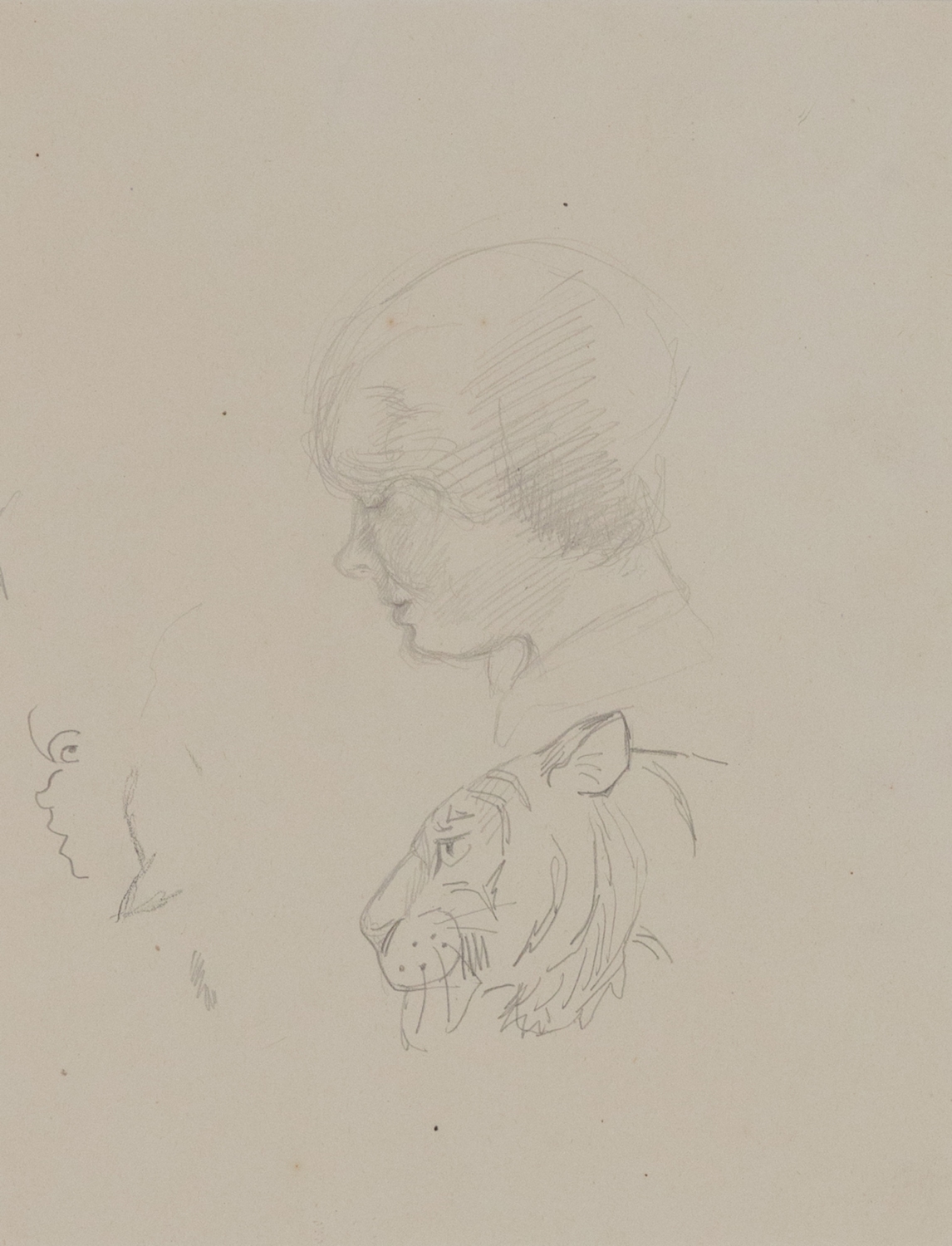
A Study of Human Head and Tiger
Pencil on paper
25.5 x 20 cm (10 x 7 ⁷/₈ inches)
25.5 x 20 cm (10 x 7 ⁷/₈ inches)
