
Orovida Pissarro
1893 - 1968
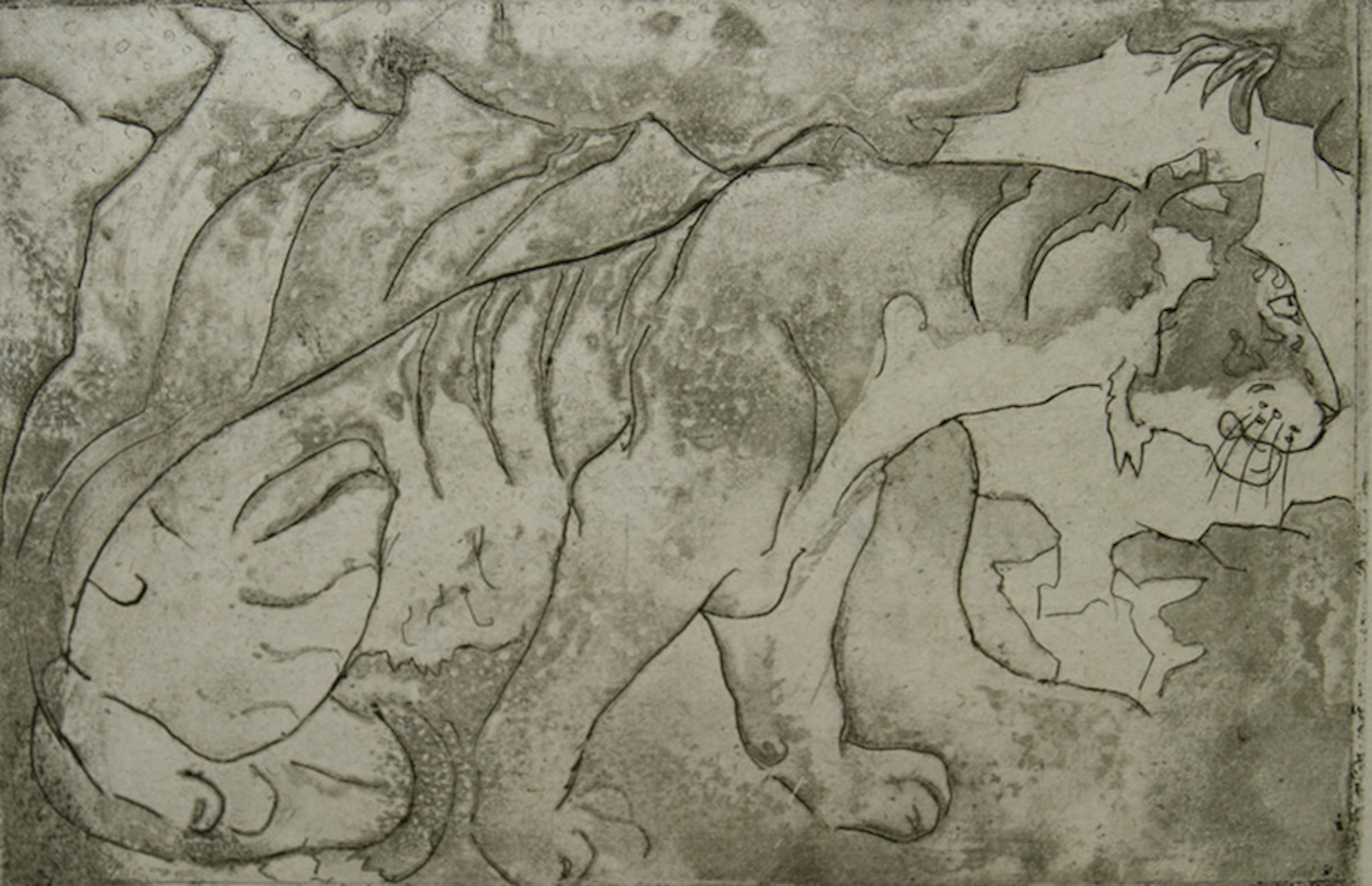
A Study of Human Head and Tiger
Pencil on paper
25.5 x 20 cm (10 x 7⁷/₈ inches)
Executed circa 1917
25.5 x 20 cm (10 x 7⁷/₈ inches)
Executed circa 1917
£ 600
(+ VAT)


This original artwork by Orovida Pissarro is available for immediate purchase.
Orovida Pissarro
biography
Orovida Camille Pissarro, granddaughter of Camille Pissarro, was the only child of Lucien and Esther Pissarro. Born in Epping in 1893, she was the first woman of the family to become an artist and the first of her generation to do so. She lived and worked predominantly in London, where she became a member of several British arts clubs and societies.
Orovida first learned to paint in the Impressionist manner of her father. After a brief period of formal study with Walter Sickert in 1913, she turned away from formal art schooling and remained outside any mainstream British movement throughout her career. To Lucien's disappointment, she soon moved away from naturalistic painting and developed a distinctive style drawing on Japanese, Chinese, Persian and Indian art.
Her departure from Impressionism, which had become a way of life for the Pissarro family, and her decision to drop the family name and use Orovida alone as a nom de peintre, suggest a desire for independence and distance from the weight of the family legacy.
Her most distinctive works were produced between 1919 and 1939, using homemade egg tempera applied in thin, delicate washes to silk, linen or paper and sometimes finished with brocade borders. These decorative works generally depict Eastern, Asian and African subjects, such as Mongolian horse-riders, tribal dancers and Persian princes, often engaged in dancing or hunting rituals.
The second half of her career was marked by a change in style and subject. The outbreak of the Second World War brought a shortage of eggs, which led Orovida to take up oil painting. The new medium accompanied a turn to contemporary subjects from everyday life and a return to a more naturalistic manner. She was also a printmaker, working in etching, engraving and lithography, and a skilled draughtsman. She observed animals at London Zoo, which she juxtaposed with images of the peoples of the countries they originally inhabited. The British Museum and the Ashmolean Museum in Oxford both hold substantial collections of her etchings.
Towards the end of her life, she played an important part in developing the Pissarro family archive, established by her parents at the Ashmolean Museum. Her work is also held in a number of public collections across the United Kingdom. She never married and had no children.
Orovida Pissarro
biography

you may also like

Orovida Pissarro
1893 - 1968
Nylons and Bric-a-Brac
Oil on canvas
73 x 60 cm (28 ³/₄ x 23 ⁵/₈ inches)
73 x 60 cm (28 ³/₄ x 23 ⁵/₈ inches)


Orovida Pissarro
1893 - 1968
Peccarys and Tiger Pranks
Etching and aquatint
31.5 x 23 cm (12.40 x 9.06 inches)
31.5 x 23 cm (12.40 x 9.06 inches)

