
Raoul Dufy
(1877 - 1953)

Raoul Dufy
biography
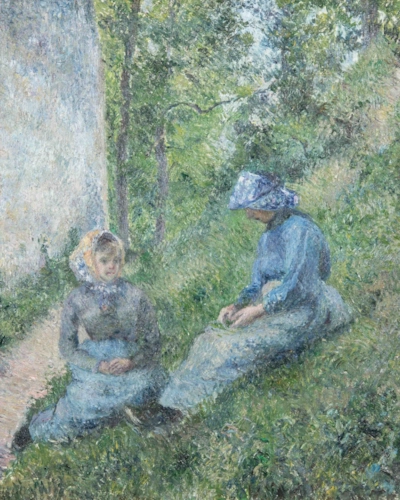
Born in Le Havre, Raoul Dufy studied at the École des Beaux-Arts there before winning a scholarship in 1900 to the École nationale supérieure des Beaux-Arts, Paris. His early paintings reflect the Impressionists he admired on the Normandy coast, above all Monet and Pissarro, together with views of the port and regattas around his home city.
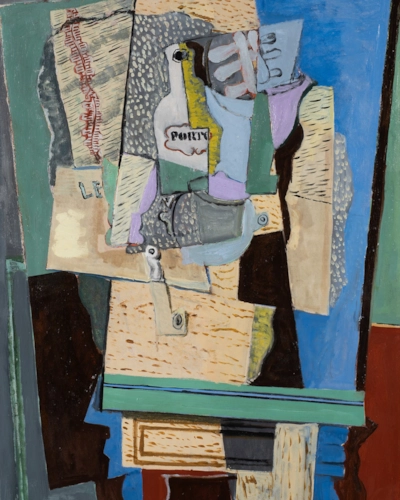
After the 1905 Salon d’Automne he adopted the high colour and firm contour associated with Fauvism. The Cézanne retrospective of 1907 redirected his attention to structure and led to a brief, more constructed phase close to early Cubism. By the 1910s he had evolved his characteristic “stenographic” style: rapid, calligraphic line drawn over luminous colour washes, used to register changing light and rhythm rather than realism.
Motifs from modern leisure recur throughout his work, notably harbours and promenades, yachts and regattas, horse races at Longchamp or Epsom, orchestras and interiors. The subjects are arranged with buoyant spacing and a decorative sense of cadence that became a hallmark of his style.
Dufy worked widely across the decorative arts. He illustrated books, such as Apollinaire’s Le Bestiaire (1911), designed printed textiles for the Lyon firm Bianchini-Férier (from 1912), and produced ceramics and tapestries. The transfer between media sharpened his feeling for pattern and surface and fed back into the paintings.
He first exhibited in 1901 at the Salon des Artistes Français and continued to show at the Salon d’Automne and the Salon des Indépendants. In 1906 he took part in the Cercle de l’Art Moderne in Le Havre with Braque, Matisse and Manguin. Bernheim-Jeune presented his first retrospective in 1921. For the 1937 Exposition internationale des arts et techniques he painted the monumental mural La Fée électricité for the Palais de la Lumière et de l’Électricité (today Musée d’Art Moderne de Paris).
From the late 1930s Dufy suffered from polyarthritis, yet continued to work, often in the south of France. He represented France at the Venice Biennale in 1952, where he received the Gran Premio. He died in 1953.
Dufy’s paintings and works on paper are held in major public collections, including the Musée d’Art Moderne de Paris, the Musée National d’Art Moderne–Centre Pompidou, Tate, London, and the Museum of Modern Art, New York. His oeuvre is prized for luminous colour, musical line and an enduring celebration of modern urban and coastal life.
Dufy worked widely across the decorative arts. He illustrated books, notably Apollinaire’s Le Bestiaire (1911), designed printed textiles for the Lyon firm Bianchini-Férier (from 1912), and produced ceramics and tapestries. The transfer between media sharpened his feeling for pattern and surface and fed back into the paintings.
He first exhibited in 1901 at the Salon des Artistes Français and continued to show at the Salon d’Automne and the Salon des Indépendants. In 1906 he took part in the Cercle de l’Art Moderne in Le Havre with Braque, Matisse and Manguin. Bernheim-Jeune presented his first retrospective in 1921. For the 1937 Exposition internationale des arts et techniques he painted the monumental mural La Fée électricité for the Palais de la Lumière et de l’Électricité (today Musée d’Art Moderne de Paris).
From the late 1930s Dufy suffered from polyarthritis, yet continued to work, often in the south of France. He represented France at the Venice Biennale in 1952, where he received the Gran Premio. He died in 1953.
Dufy’s paintings and works on paper are held in major public collections, including the Musée d’Art Moderne de Paris, the Musée National d’Art Moderne–Centre Pompidou, Tate, London, and the Museum of Modern Art, New York. His oeuvre is prized for luminous colour, musical line and an enduring celebration of modern urban and coastal life.
After the 1905 Salon d’Automne he adopted the high colour and firm contour associated with Fauvism. The Cézanne retrospective of 1907 redirected his attention to structure and led to a brief, more constructed phase close to early Cubism. By the 1910s he had evolved his characteristic “stenographic” style: rapid, calligraphic line drawn over luminous colour washes, used to register changing light and rhythm rather than realism.
Motifs from modern leisure recur throughout his work, notably harbours and promenades, yachts and regattas, horse races at Longchamp or Epsom, orchestras and interiors. The subjects are arranged with buoyant spacing and a decorative sense of cadence that became a hallmark of his style.
Dufy worked widely across the decorative arts. He illustrated books, such as Apollinaire’s Le Bestiaire (1911), designed printed textiles for the Lyon firm Bianchini-Férier (from 1912), and produced ceramics and tapestries. The transfer between media sharpened his feeling for pattern and surface and fed back into the paintings.
He first exhibited in 1901 at the Salon des Artistes Français and continued to show at the Salon d’Automne and the Salon des Indépendants. In 1906 he took part in the Cercle de l’Art Moderne in Le Havre with Braque, Matisse and Manguin. Bernheim-Jeune presented his first retrospective in 1921. For the 1937 Exposition internationale des arts et techniques he painted the monumental mural La Fée électricité for the Palais de la Lumière et de l’Électricité (today Musée d’Art Moderne de Paris).
From the late 1930s Dufy suffered from polyarthritis, yet continued to work, often in the south of France. He represented France at the Venice Biennale in 1952, where he received the Gran Premio. He died in 1953.
Dufy’s paintings and works on paper are held in major public collections, including the Musée d’Art Moderne de Paris, the Musée National d’Art Moderne–Centre Pompidou, Tate, London, and the Museum of Modern Art, New York. His oeuvre is prized for luminous colour, musical line and an enduring celebration of modern urban and coastal life.
Dufy worked widely across the decorative arts. He illustrated books, notably Apollinaire’s Le Bestiaire (1911), designed printed textiles for the Lyon firm Bianchini-Férier (from 1912), and produced ceramics and tapestries. The transfer between media sharpened his feeling for pattern and surface and fed back into the paintings.
He first exhibited in 1901 at the Salon des Artistes Français and continued to show at the Salon d’Automne and the Salon des Indépendants. In 1906 he took part in the Cercle de l’Art Moderne in Le Havre with Braque, Matisse and Manguin. Bernheim-Jeune presented his first retrospective in 1921. For the 1937 Exposition internationale des arts et techniques he painted the monumental mural La Fée électricité for the Palais de la Lumière et de l’Électricité (today Musée d’Art Moderne de Paris).
From the late 1930s Dufy suffered from polyarthritis, yet continued to work, often in the south of France. He represented France at the Venice Biennale in 1952, where he received the Gran Premio. He died in 1953.
Dufy’s paintings and works on paper are held in major public collections, including the Musée d’Art Moderne de Paris, the Musée National d’Art Moderne–Centre Pompidou, Tate, London, and the Museum of Modern Art, New York. His oeuvre is prized for luminous colour, musical line and an enduring celebration of modern urban and coastal life.
Raoul Dufy
biography