
Édouard Vuillard
1868 - 1940
Confidence, les enfants Bernheim au salon
Oil on board laid down on cradled panel
57 x 77.5 cm (22 ¹/₂ x 30 ¹/₂ inches)
Signed and dated lower right, E Vuillard 05
Executed in 1905
57 x 77.5 cm (22 ¹/₂ x 30 ¹/₂ inches)
Signed and dated lower right, E Vuillard 05
Executed in 1905


Gaston Bernheim de Villers, Paris
Sam Salz, Inc., New York
George Friedland, Marion, Pennsylvania, circa 1960
The Lefevre Gallery (Alex. Reid & Lefevre, Ltd.), London
Private collection, Miami
Lillian Heidenberg Gallery, New York
Private collection, USA, acquired from the above, circa 1996
Sam Salz, Inc., New York
George Friedland, Marion, Pennsylvania, circa 1960
The Lefevre Gallery (Alex. Reid & Lefevre, Ltd.), London
Private collection, Miami
Lillian Heidenberg Gallery, New York
Private collection, USA, acquired from the above, circa 1996
Paris, Grand Palais des Champs-Elysées, Salon d'automne, 4ème exposition, October-November 1906, no. 1746
Paris, Galerie Bernheim-Jeune et Cie., Vuillard, May-June 1907, no. 11
Paris, Galerie Bernheim-Jeune et Cie., Oeuvres de Vuillard de 1890 à 1910, January-February 1938, no. 34
Paris, Galerie Bernheim-Jeune et Cie., Vuillard, May-June 1907, no. 11
Paris, Galerie Bernheim-Jeune et Cie., Oeuvres de Vuillard de 1890 à 1910, January-February 1938, no. 34
C. Roger-Marx, Vuillard, Paris, 1948, p. 26, no. 66 (illustrated, p. 73; titled Les enfants Bernheim-Jeune)
A. Salomon and G. Cogeval, Vuillard: Le regard innombrable, catalogue critique des peintures et pastels, Paris, 2003, vol. II, p. 733, no. VII-389 (illustrated)
A. Salomon and G. Cogeval, Vuillard: Le regard innombrable, catalogue critique des peintures et pastels, Paris, 2003, vol. II, p. 733, no. VII-389 (illustrated)
Édouard Vuillard
biography
Édouard Vuillard was born in Saône-et-Loire, France, in 1868. Raised in a household shaped by his mother’s dressmaking workshop, Vuillard developed an early sensitivity to textile pattern, colour and domestic interiors. He studied briefly at the Lycée Condorcet, where he formed lifelong artistic friendships, before entering the École des Beaux-Arts and later the Académie Julian. There he encountered Pierre Bonnard and Maurice Denis, with whom he would go on to establish the Nabi circle by 1890.
Les Nabis (from the Hebrew for prophet) were an avant-garde group indebted to the innovations of Gauguin and Japanese printmaking. Collectively, the Nabis artists maintained that art was a synthesis of metaphors and symbols manifested in everyday life. Vuillard shared a studio with Bonnard, his closest peer, and during this time developed a reputation for theatre decoration and decorative painting. Notable commissions include the series for the Théâtre de l’Œuvre in Paris, reflecting his interest in scenography and visual narrative. He also worked frequently in pastel, a medium that allowed for subtle surface transitions and the granular textures for which he is known.
After 1900, Vuillard’s palette brightened, and travel to London, Brussels, and Switzerland broadened his scope, while new patronage introduced grander domestic projects, portraits and mural cycles. His association with the Natanson family, founders of La Revue Blanche, granted him access to literary salons and progressive intellectual circles. The later portraits of Misia Natanson, Lucy Hessel, and members of the Thadée Natanson milieu, are characterised by combining Nabist colour sensibility with greater naturalism.
In the 1910s and 1920s, Vuillard completed several monumental decorative schemes, including panels for the Hôtel de Ville in Paris and the Palais des Nations in Geneva. His mature style retained the intimacy of his Nabi years yet adopted a stronger structural clarity. He served on the advisory board of the Musée du Luxembourg and was elected to the Académie des Beaux-Arts in 1938, consolidating his position within the French artistic establishment.
Vuillard’s work is represented in major public collections worldwide, including the Musée d’Orsay, Paris; Tate, London; the Metropolitan Museum of Art, New York; and the National Gallery of Art, Washington, D.C.
Les Nabis (from the Hebrew for prophet) were an avant-garde group indebted to the innovations of Gauguin and Japanese printmaking. Collectively, the Nabis artists maintained that art was a synthesis of metaphors and symbols manifested in everyday life. Vuillard shared a studio with Bonnard, his closest peer, and during this time developed a reputation for theatre decoration and decorative painting. Notable commissions include the series for the Théâtre de l’Œuvre in Paris, reflecting his interest in scenography and visual narrative. He also worked frequently in pastel, a medium that allowed for subtle surface transitions and the granular textures for which he is known.
After 1900, Vuillard’s palette brightened, and travel to London, Brussels, and Switzerland broadened his scope, while new patronage introduced grander domestic projects, portraits and mural cycles. His association with the Natanson family, founders of La Revue Blanche, granted him access to literary salons and progressive intellectual circles. The later portraits of Misia Natanson, Lucy Hessel, and members of the Thadée Natanson milieu, are characterised by combining Nabist colour sensibility with greater naturalism.
In the 1910s and 1920s, Vuillard completed several monumental decorative schemes, including panels for the Hôtel de Ville in Paris and the Palais des Nations in Geneva. His mature style retained the intimacy of his Nabi years yet adopted a stronger structural clarity. He served on the advisory board of the Musée du Luxembourg and was elected to the Académie des Beaux-Arts in 1938, consolidating his position within the French artistic establishment.
Vuillard’s work is represented in major public collections worldwide, including the Musée d’Orsay, Paris; Tate, London; the Metropolitan Museum of Art, New York; and the National Gallery of Art, Washington, D.C.
Édouard Vuillard
biography
you may also like
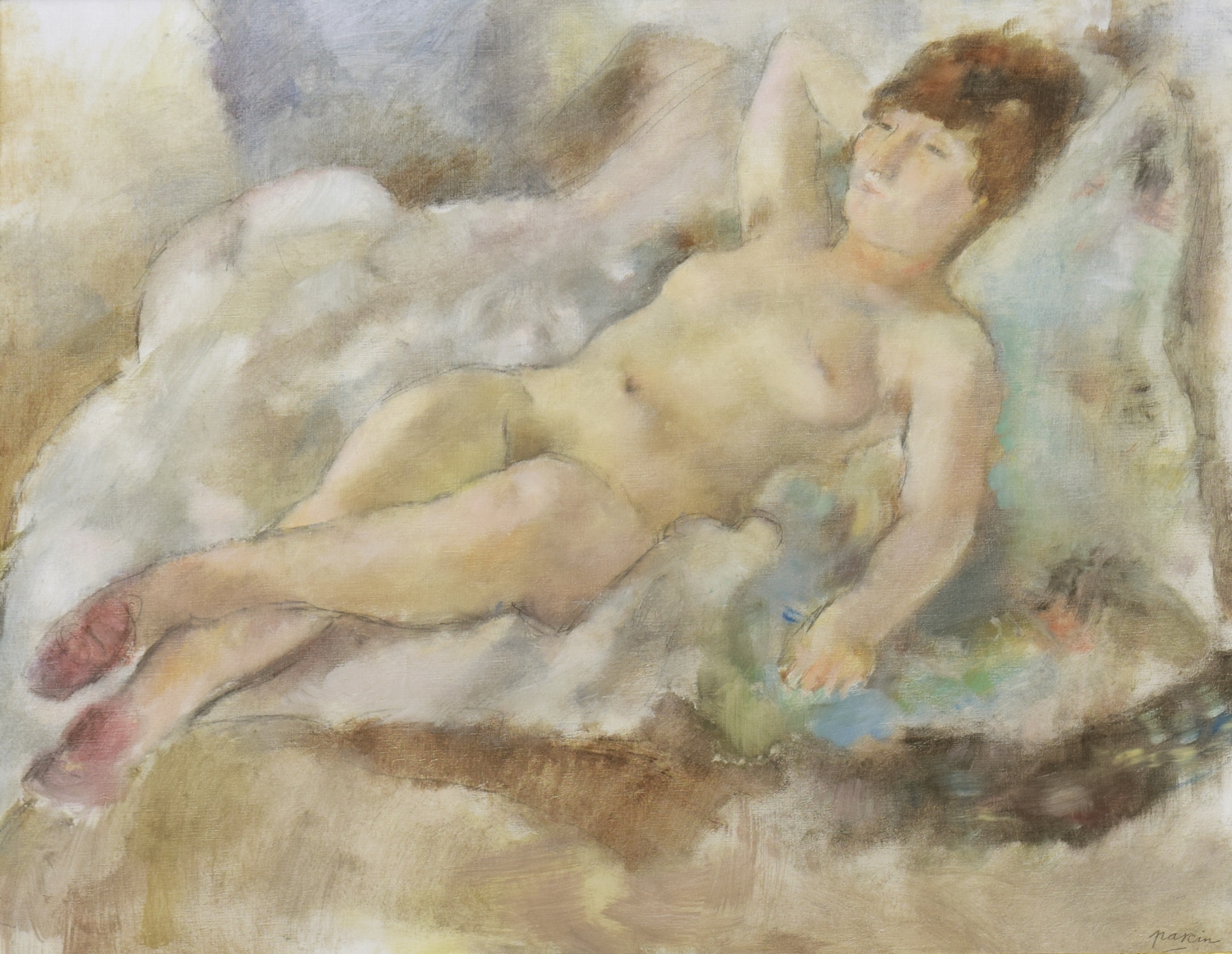
Jules Pascin
1885 - 1930
Rebecca Couchée
Oil over pencil on canvas
73.1 x 91.8 cm (28 ³/₄ x 36 ¹/₈ inches)
73.1 x 91.8 cm (28 ³/₄ x 36 ¹/₈ inches)
_1552024T121340.167.jpg?width=1500&height=1500&quality=100&mode=max&scale=both)
Camille Pissarro
1830 - 1903
La Place du Havre, Effet de Pluie
Oil on canvas
33 x 41 cm (13 x 16 ¹/₈ inches)
33 x 41 cm (13 x 16 ¹/₈ inches)
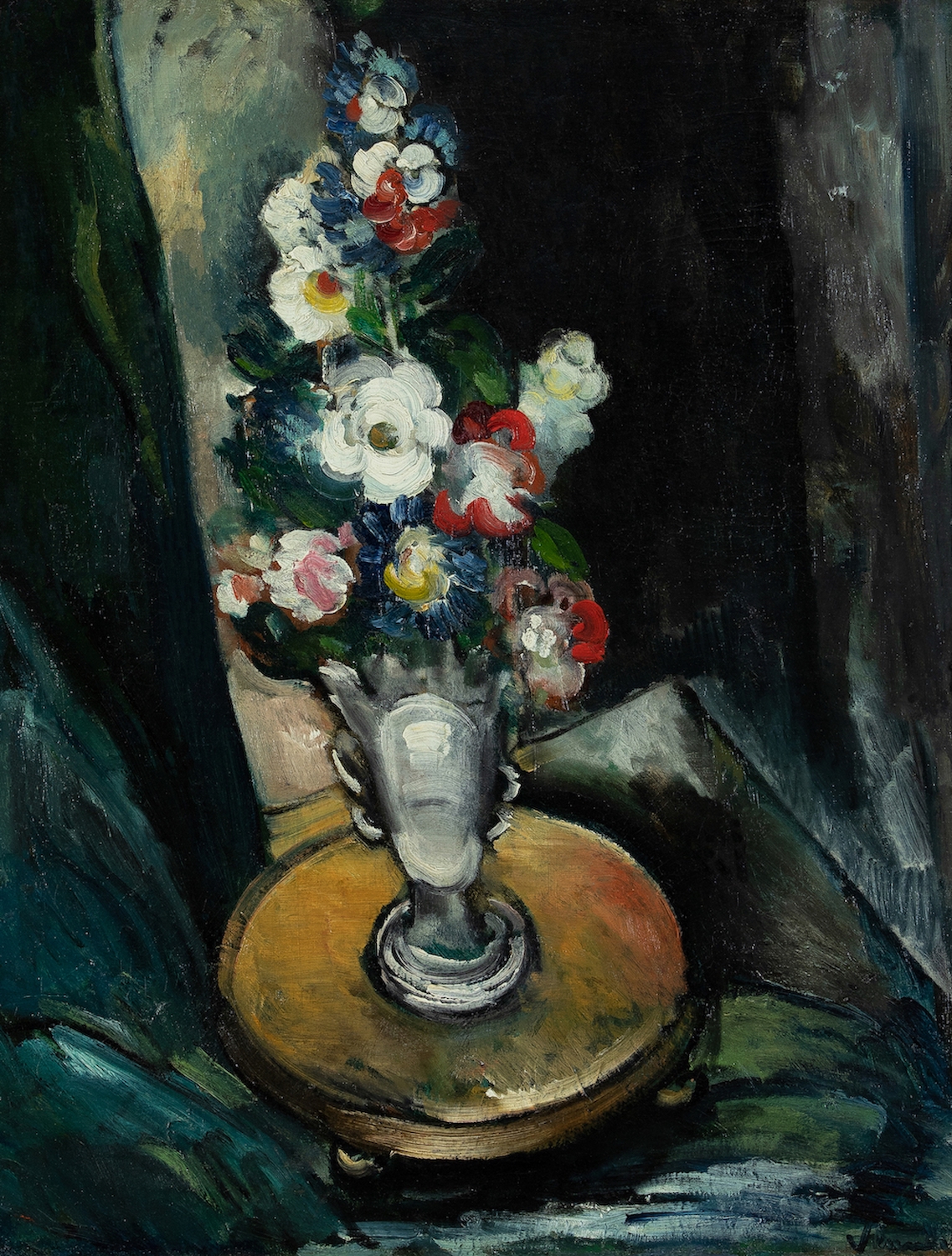
Maurice de Vlaminck
1876 - 1958
Le Guéridon au vase de fleurs
Oil on canvas
64 x 51.5 cm (25 ¹/₄ x 20 ¹/₄ inches)
64 x 51.5 cm (25 ¹/₄ x 20 ¹/₄ inches)
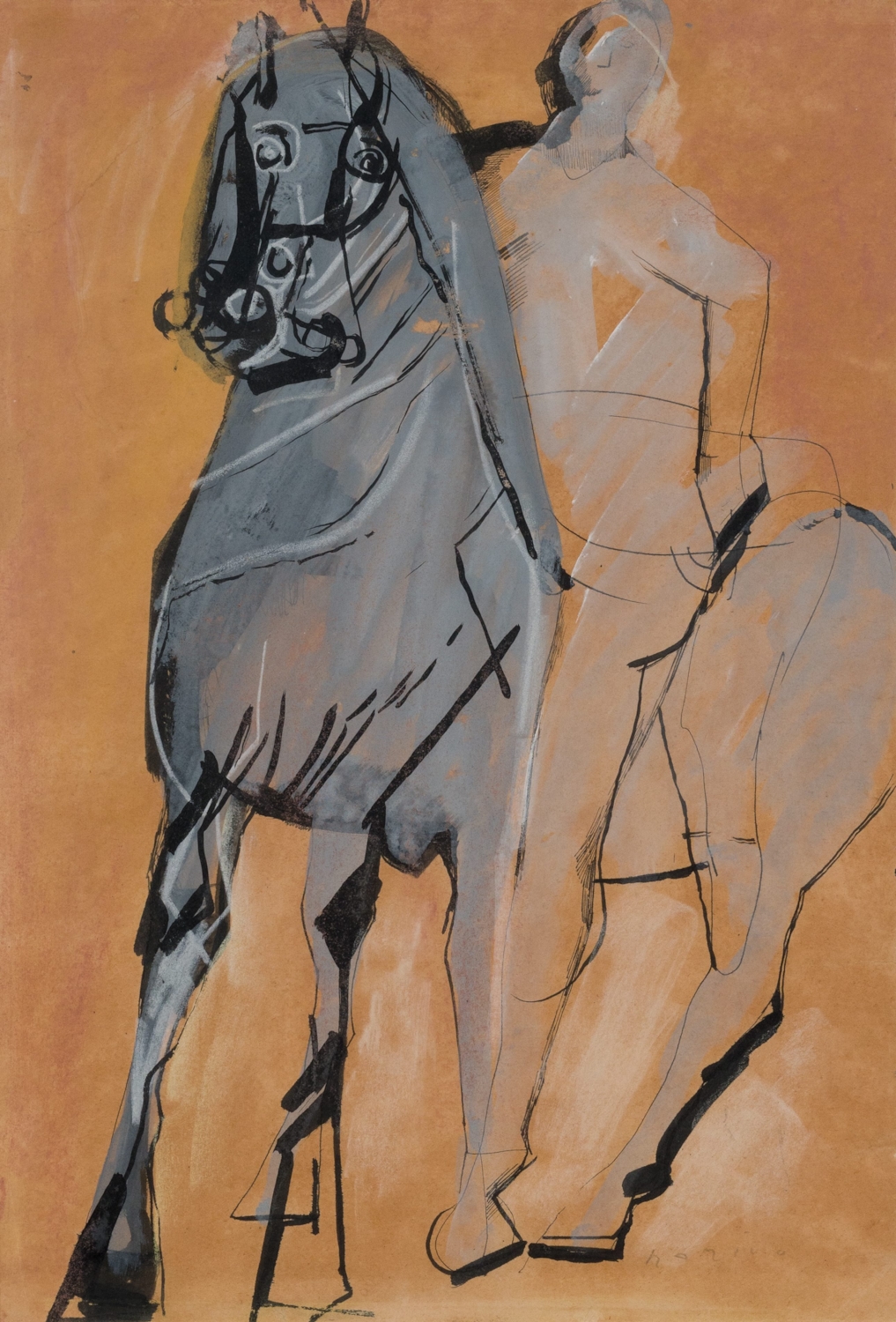
Marino Marini
1901 - 1980
Uomo e cavallo
Gouache, pen, ink and pastel on paper
50.2 x 34.4 cm (19 ³/₄ x 13 ¹/₂ inches)
50.2 x 34.4 cm (19 ³/₄ x 13 ¹/₂ inches)

