
Bernard Buffet
1928 - 1999
Nature morte au réchaud
Oil on panel
58.5 x 69 cm (23 x 27 ¹/₈ inches)
Signed and dated upper right, Bernard Buffet 48
58.5 x 69 cm (23 x 27 ¹/₈ inches)
Signed and dated upper right, Bernard Buffet 48


Galerie Maurice Garnier, Paris
Private collection, France, acquired from the above
Private collection, thance by descent
Private collection, France, acquired from the above
Private collection, thance by descent
Fonds de Dotation Bernard Buffet, Bernard Buffet: Catalogue raisonné de l’œuvre peint, vol. I, 1941 – 1953, Paris, 2019, p. 68 (illustrated)
This work is accompanied by a certificate of authenticity by Maurice Garnier.
This original work of art by Bernard Buffet is available for immediate purchase.
This original work of art by Bernard Buffet is available for immediate purchase.
Bernard Buffet
biography
Born in 1928, Bernard Buffet developed a distinctive style, integral to post-war Expressionism in Paris. Often featuring the iconic, angular script of his signature, Buffet’s work covered a range of themes from still lifes, portraits, the French Riviera and subjects such as flowers, clowns and bull fights.
Buffet began his formal studies at the prestigious École Nationale Supérieure des Beaux-Arts, Paris. During this time, he produced his first still lifes, inspired by the traditional, realist styles of Gustave Courbet and Jean Siméon Chardin, whom he would often observe in situ after the reopening of the Louvre Museum in 1945. Despite many post-war artists embracing abstraction, Buffet favoured figurative works, declaring abstraction ‘limited and boring’.
Buffet fast became a prominent figure within the French elite, experiencing celebrity at the age of twenty, and considerable financial success a decade later during the 1950s. In 1946 he exhibited his first painting, a self-portrait, at the Salon des Moins de Trente Ans at the Galerie Beaux-Arts, following this he enjoyed successful annual exhibitions. In 1956, the Paris Match published an article declaring him “the young millionaire painter”.
In 1999, Bernard Buffet committed suicide after years of suffering from Parkinson’s disease. He had previously declared that the day he could no longer paint would be the day he died. Today, his work can be found hanging alongside masters such as Matisse, Braque and Léger in several public collections including the Centre Georges Pompidou, The National Museum of Modern Art in Paris, National Museum of Western Art, Tokyo, Bernard Buffet Museum, Nagaizumi, Japan and Tate Gallery, London.
Buffet began his formal studies at the prestigious École Nationale Supérieure des Beaux-Arts, Paris. During this time, he produced his first still lifes, inspired by the traditional, realist styles of Gustave Courbet and Jean Siméon Chardin, whom he would often observe in situ after the reopening of the Louvre Museum in 1945. Despite many post-war artists embracing abstraction, Buffet favoured figurative works, declaring abstraction ‘limited and boring’.
Buffet fast became a prominent figure within the French elite, experiencing celebrity at the age of twenty, and considerable financial success a decade later during the 1950s. In 1946 he exhibited his first painting, a self-portrait, at the Salon des Moins de Trente Ans at the Galerie Beaux-Arts, following this he enjoyed successful annual exhibitions. In 1956, the Paris Match published an article declaring him “the young millionaire painter”.
In 1999, Bernard Buffet committed suicide after years of suffering from Parkinson’s disease. He had previously declared that the day he could no longer paint would be the day he died. Today, his work can be found hanging alongside masters such as Matisse, Braque and Léger in several public collections including the Centre Georges Pompidou, The National Museum of Modern Art in Paris, National Museum of Western Art, Tokyo, Bernard Buffet Museum, Nagaizumi, Japan and Tate Gallery, London.
Bernard Buffet
biography
you may also like

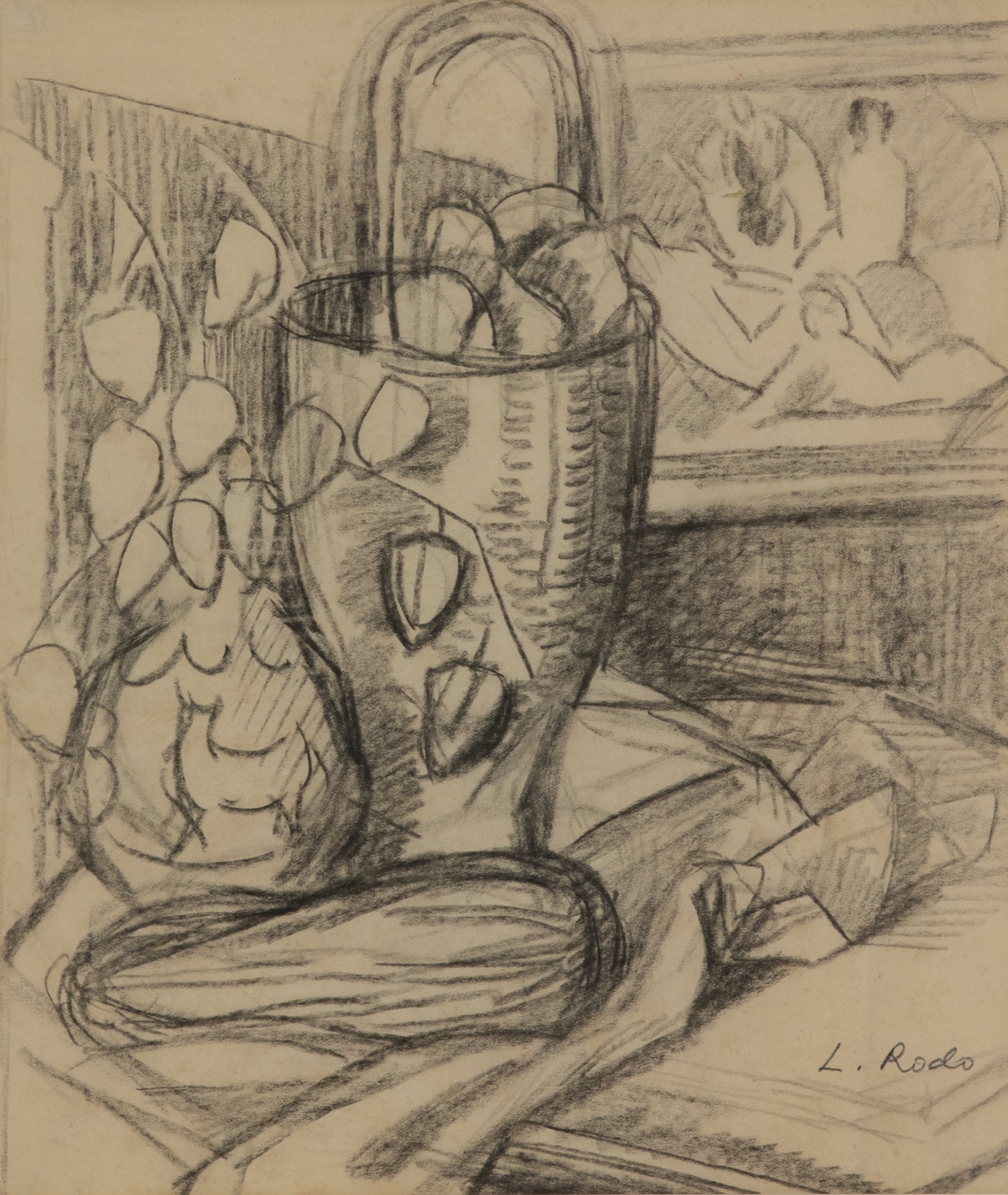


Hugues Pissarro dit Pomié
b. 1935
Bouquet à la Fenêtre
Oil on canvas
96.7 x 129.8 x 2.5 cm (38 ¹/₈ x 51 ¹/₈ x 1 inches)
96.7 x 129.8 x 2.5 cm (38 ¹/₈ x 51 ¹/₈ x 1 inches)