Georges Manzana Pissarro
1871 - 1961
Petit Lavoir du Pont Pierre, Moret-sur-Loing

Georges Manzana Pissarro
1871 - 1961
Petit Lavoir du Pont Pierre, Moret-sur-Loing
Oil on canvas
54.5 x 65.5 cm (21 ¹/₂ x 25 ³/₄ inches)
Signed and dated lower left, G Manzana 1902
54.5 x 65.5 cm (21 ¹/₂ x 25 ³/₄ inches)
Signed and dated lower left, G Manzana 1902


Mann Gallery, New Orleans, Louisiana
Collection of Noel and Kathryn Dickinson Wadsworth, Atlanta, Georgia (acquired in December 1998)
Collection of Noel and Kathryn Dickinson Wadsworth, Atlanta, Georgia (acquired in December 1998)
Auburn, Alabama, Auburn University, The Jule Collins Smith Museum of Fine Art, Auburn Collects: The Noel and Kathryn Dickinson Wadsworth Collection, March 13 - May 21, 2004, pl. 26, p. 49 (illustrated)
This work is accompanied by a certificate of authenticity from Lélia Pissarro.
As an early work, completed during his father Camille Pissarro’s lifetime, this painting demonstrates the undeniable talent of Georges Manzana Pissarro. Located on the river Loing, Moret is a beautiful town which was visited by many Impressionist painters in France. Manzana’s light, swift brushstrokes perfectly capture the visual richness of the French landscape, and it can be considered a historical snapshot of an area loved by some of France’s most revered painters.
This original painting by Georges Manzana Pissarro is available for immediate purchase.
Georges Manzana Pissarro
biography
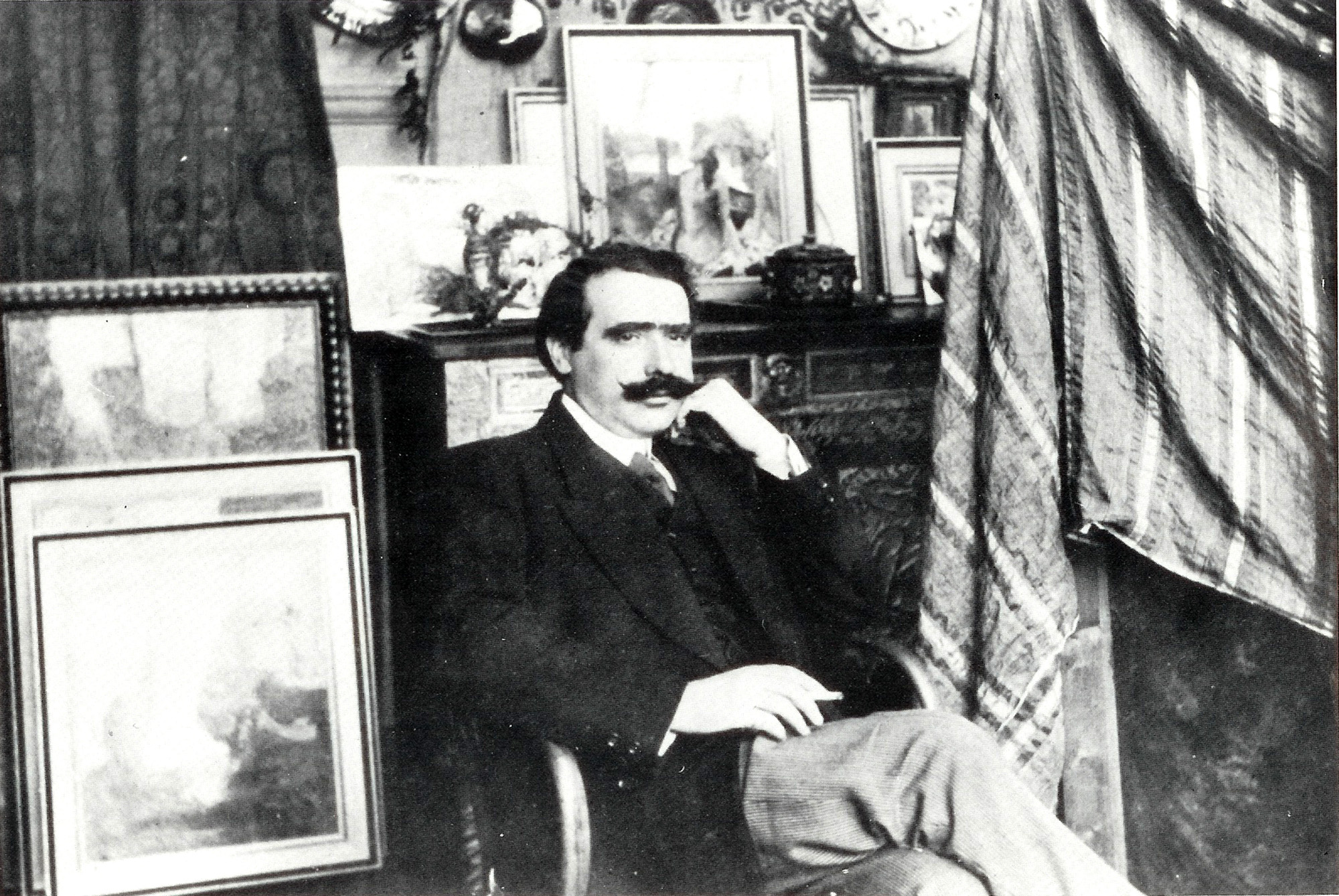
Georges Henri Pissarro, known as Manzana, was the second son of Camille Pissarro, born in 1871. He adopted the name Manzana in 1894, after the maiden name of his paternal grandmother, and, like several of his brothers, initially worked under a pseudonym. From around 1910, in tribute to his late father, he began to sign his work with the family name.
Manzana studied with Camille from an early age and spent his formative years among the artists of the Impressionist circle, including Claude Monet, Paul Cézanne and Paul Gauguin, who frequented the family home at Éragny. Working in oil, pastel and watercolour, as well as etching, lithography and stencils, he became a prolific and versatile artist. As a young man he adopted his father's Impressionist style and produced a series of landscapes around Éragny. In the early 1900s he exhibited these works at the Salon d'Automne and the Salon des Indépendants, and at the Galerie Durand-Ruel and the Galerie Druet in Paris.
In 1906 his work began to change direction. Inspired by Dr Mardrus's French translation of A Thousand and One Nights, Manzana embarked on an ambitious project to publish his own illustrated version of the tales. This drew him into the decorative arts movement, and he went on to create tapestries, glassware, furniture, ceramics and metalwork, all indebted to Orientalism and often incorporating gold, silver and copper paint. His first exhibition of decorative works was held at Vollard in 1907, and an exhibition at the Musée des Arts Décoratifs in Paris in 1914 significantly raised his profile. There he showed 311 works, including tapestries, carpets, furniture, glassware, decorative paintings, etchings and lithographs.
In the 1920s and 1930s Manzana divided his time between Les Andelys and Paris, spending many summers in Brittany, and exhibited widely. When war broke out in 1939, he moved with his family to Casablanca, where he remained until 1947. He was married and widowed three times. The last years of his life were spent in Menton with his son Félix, also an artist, and it was there that Manzana returned to the Impressionist tradition of his early years, painting the serene landscapes around him.
Georges Manzana Pissarro
biography
you may also like
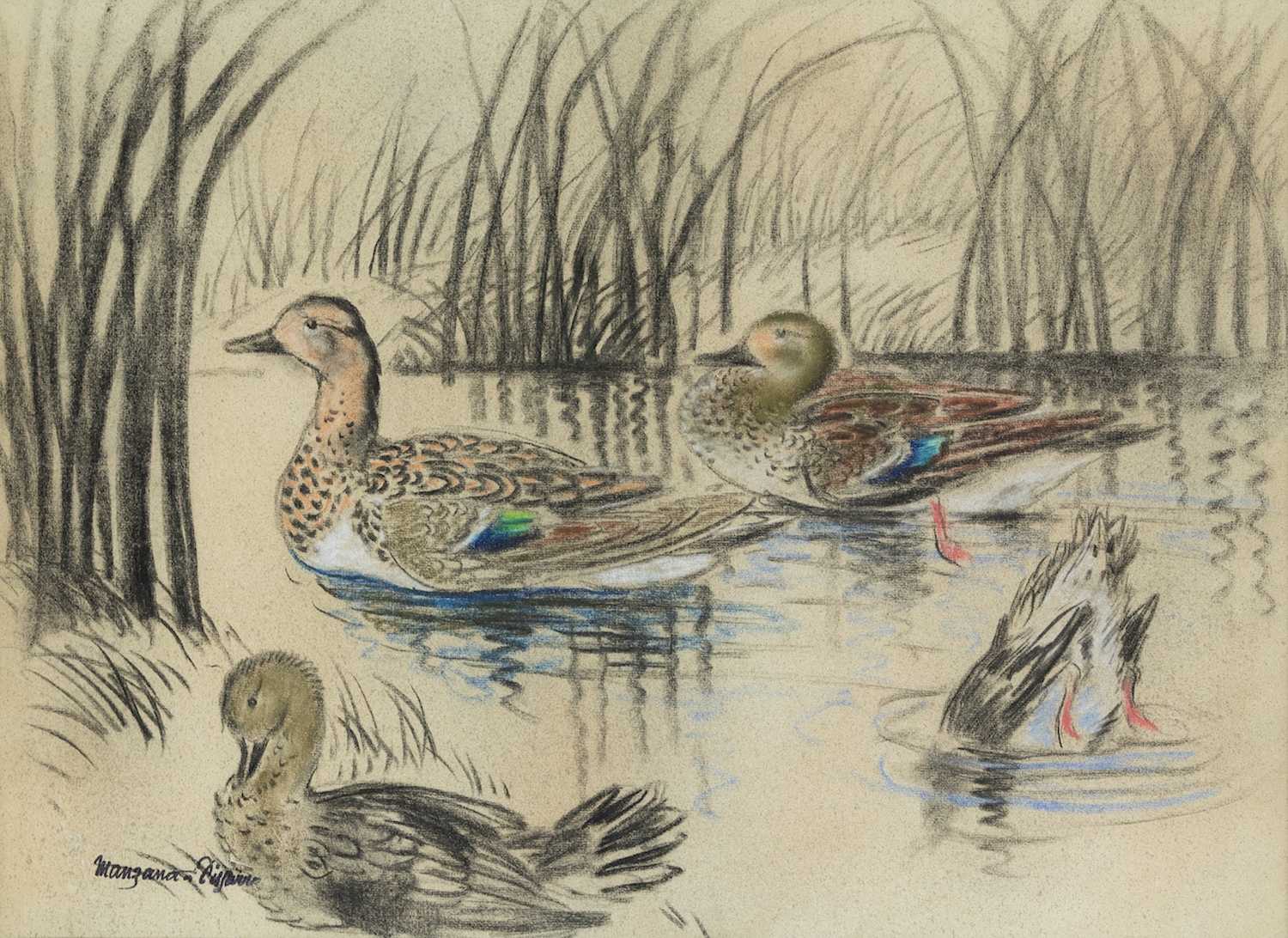
Georges Manzana Pissarro
1871 - 1961
Wild Ducks
Charcoal and pastel on paper
46 x 62 cm (18.11 x 24.41 inches)
46 x 62 cm (18.11 x 24.41 inches)
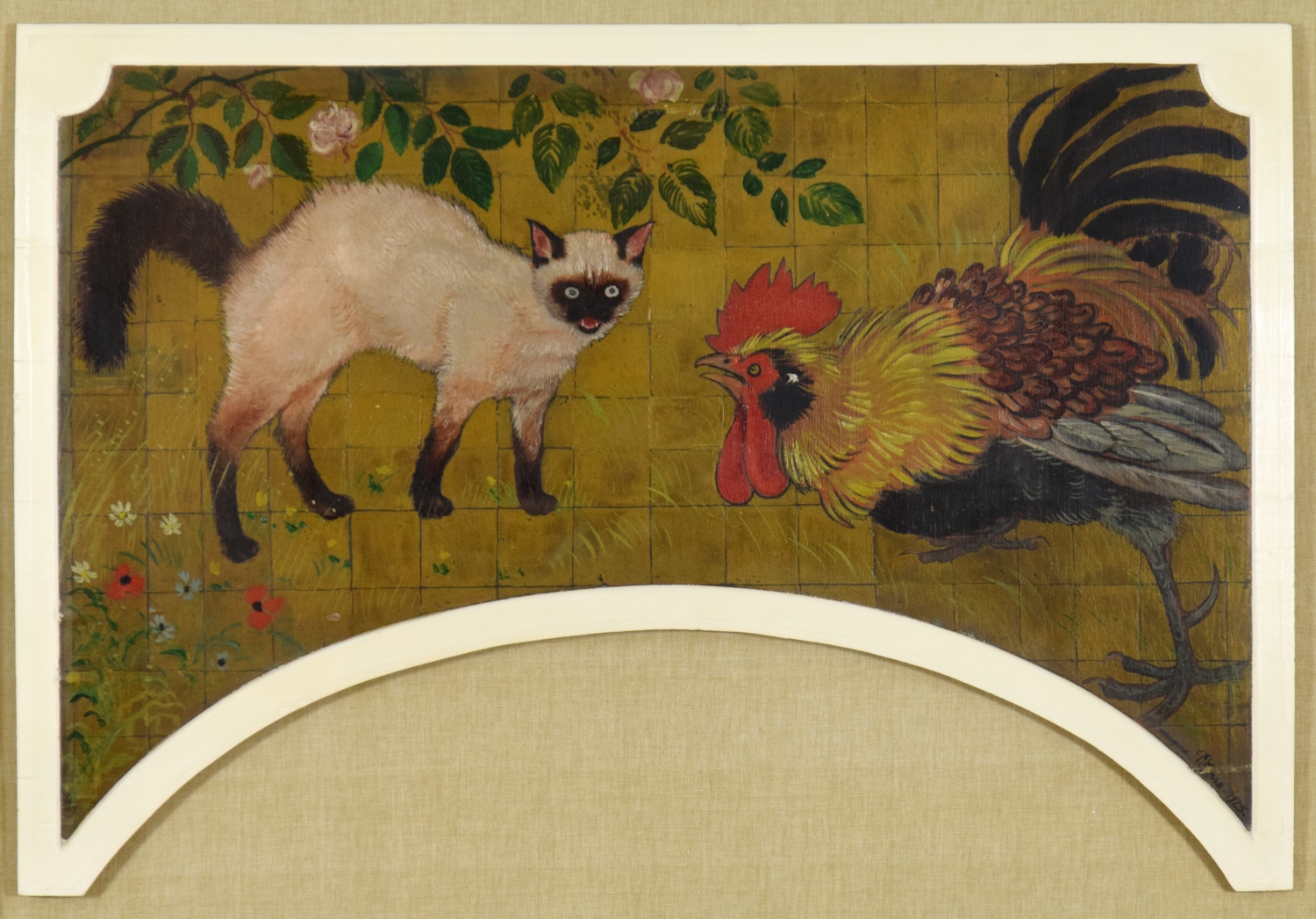
Georges Manzana Pissarro
1871 - 1961
Cat and Cockerel
Oil and gold on panel
65 x 94 cm (25 ⁵/₈ x 37 inches)
65 x 94 cm (25 ⁵/₈ x 37 inches)
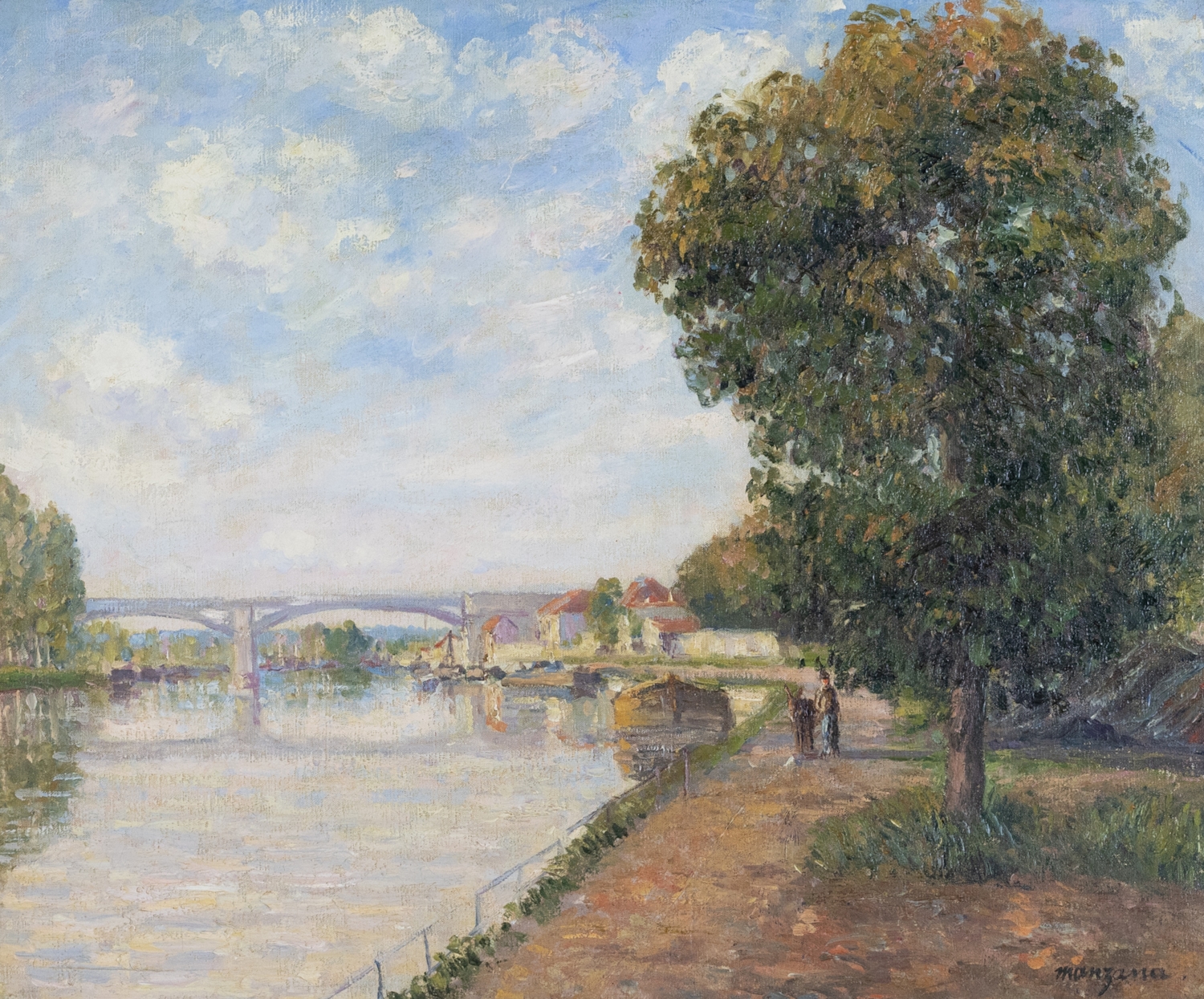
Georges Manzana Pissarro
1871 - 1961
Pont du Chemin de Fer à Moret
Oil on canvas
54.5 x 65.2 cm (21 ¹/₂ x 25 ⁵/₈ inches)
54.5 x 65.2 cm (21 ¹/₂ x 25 ⁵/₈ inches)

Georges Manzana Pissarro
1871 - 1961
Bateau à quai
Oil on canvas
46.5 x 55.5 cm (18 ¹/₄ x 21 ⁷/₈ inches)
46.5 x 55.5 cm (18 ¹/₄ x 21 ⁷/₈ inches)


Georges Manzana Pissarro
1871 - 1961
Moret-sur-Loing
Oil on canvas
60 x 81 cm (23 ⁵/₈ x 31 ⁷/₈ inches)
60 x 81 cm (23 ⁵/₈ x 31 ⁷/₈ inches)
